
Homeowners
During spring and summer Manitobans get to work on various landscaping projects. Whether you’re building a fence or planting a tree, if you dig any deeper than 15 cm (approximately 6”), you need to Click Before You Dig (clickbeforeyoudigmb.com).
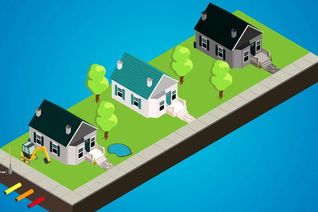
How and why to use Click Before You Dig
A lot of landscaping, yardwork and construction activities require a line locate to keep you and your family safe. Watch to learn how and when you should use Click Before You Dig.
Video: 1:43
Contractors
If you’re planning on digging or excavating deeper than 15 cm (approximately 6") on a construction site, for a new build or for a large-scale landscaping project, you must Click Before You Dig (clickbeforeyoudigmb.com).
What is Click Before You Dig?
We’re part of a service provided by the Manitoba Common Ground Alliance. This service coordinates underground line locates for multiple utilities and is called Click Before You Dig MB (clickbeforeyoudigmb.com).
Once you request a line locate online or by phone, we’ll come out and mark any underground electrical and natural gas lines on your property or worksite before you get to work. This helps you work safely and prevents personal injury or death from contacting an underground line.
Before you dig
If you plan to excavate or dig into the ground deeper than 15 cm, call 1‑800‑940‑3447 or complete a line locate request (clickbeforeyoudigmb.com).
- You'll be contacted within three business days with a line locate date.
- We'll locate and mark our electrical and natural gas lines with flags and spray paint.
- You'll get a facilities locate form with specific instructions that must be followed, in accordance with Government of Manitoba statues and regulations.
During excavation
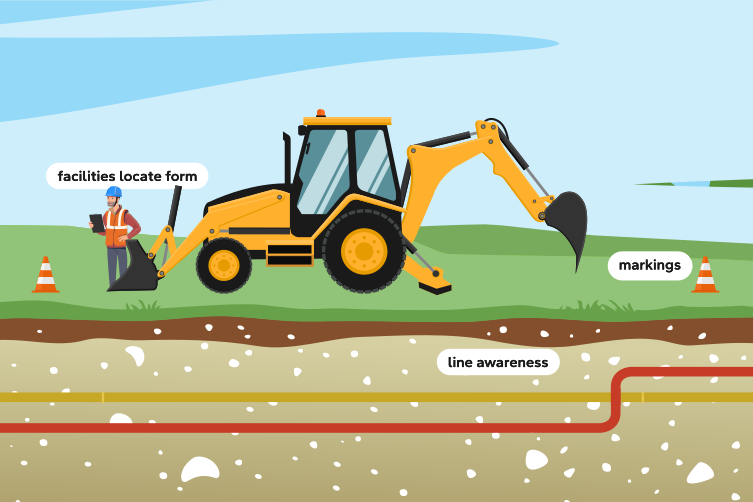
- Keep the facilities locate form at the site until the excavation and backfill are complete.
- Make sure everyone on the worksite is aware of the presence of all electric and natural gas lines.
- The locate markings must be maintained and kept visible by the person or contractor doing the excavating. Be careful that site operators do not remove the locate markings.
Safe excavation near underground electric and natural gas facilities
It’s important to dig safely on farmland around our facilities. If you plan on digging or excavating near a right-of-way (ROW) or natural gas infrastructure, Click Before You Dig (clickbeforeyoudigmb.com).
Right of way
Landowners grant us right-of-way, a strip of land that contains our facilities. This allows us access for the purpose of inspection, maintenance, testing or emergencies. A right-of-way also identifies an area that restricts certain activities such as digging and blasting.
Minell Pipeline
The Minell pipeline is a transmission pressure natural gas pipeline and is federally regulated by the Canada Energy Regulator (cer-rec.gc.ca). This federally-regulated pipeline starts near Moosomin, Saskatchewan, travels 4 km to the Saskatchewan–Manitoba border and continues up to Russell, Manitoba. The Minell Pipeline has a 30-metre prescribed area outside of the right-of-way that restricts some activities.
You must get our consent before you start any construction or excavation work on or around the Minell pipeline (for example, installing field drainage or stump removal).