
Dams and generating stations
Water around our generating stations is turbulent. Strong currents, undertow and rapidly changing water levels can quickly turn a dry riverbed into fast-moving water. Stay a safe distance away from marked-off areas when fishing, boating or swimming. Getting too close or ignoring warning signs can be fatal.
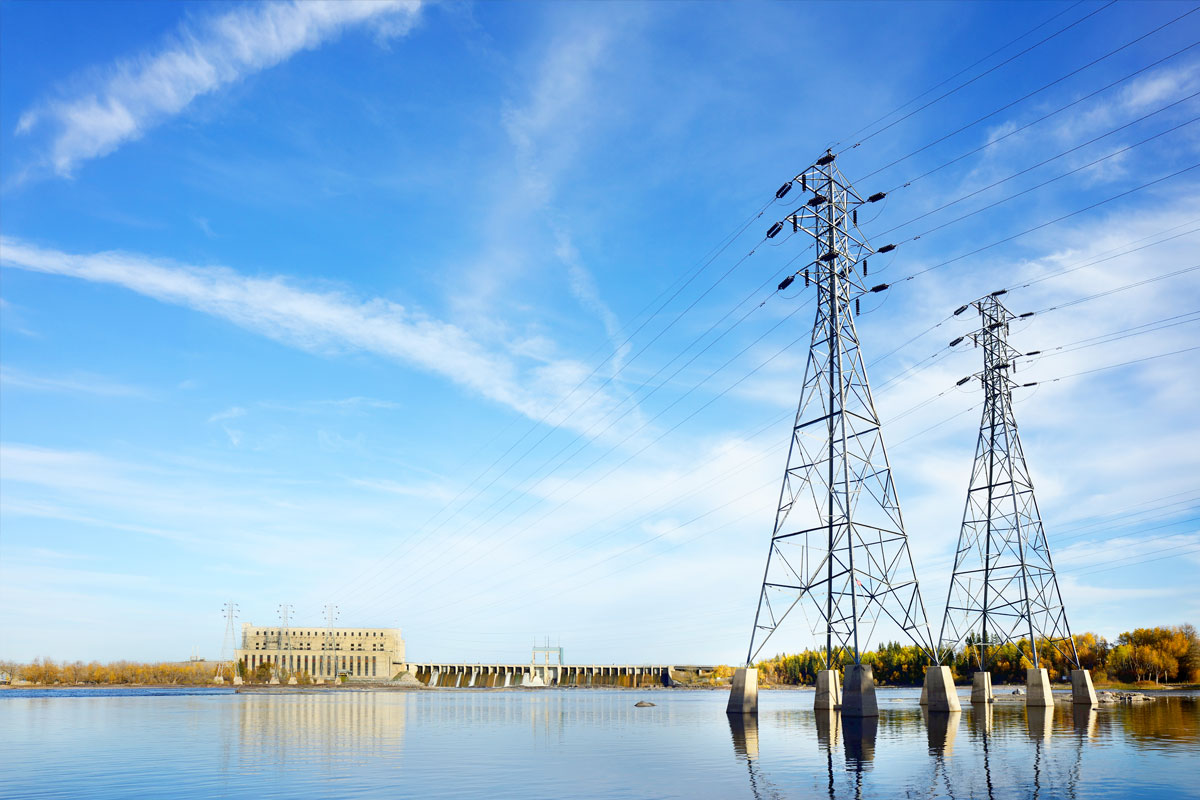
- Look for and obey all warning signs.
- Stay on clearly marked walkways or observation points.
- Stay away from fenced-off areas such as:
- booms (temporary floating barriers) or buoys (anchored floats) in waterways
- other barriers that prevent access to dangerous places
- Listen for a generating station warning horn or siren because it means the water levels are changing so move away quickly if you are downstream.
- In winter, never walk, snowmobile, snowshoe, ski, skate or ice fish on waterways near dams and generating stations. The ice can be dangerously thin and unstable even if it appears solid.
Avoid dangerous waterway zones
Choose a generating station from the map below to see where the zones are marked. From mid-May to mid-October, the danger zone near the spillway entrance is marked by a boom (temporary floating barrier).
If the problem continues, you may need to disable your ad blockers to view the map.
This map is for general information only. It should not be used for navigation or to determine distance, direction or hazard locations.
Substations
Substations are part of our electrical distribution system. The high voltage electricity inside a substation can cause severe injuries or death. Security fencing around the substation protects people and animals from high voltage contact. Vandals who open gates or cut holes in the fence can make it easier for children and animals to enter.
If you see suspicious activity around a substation, or a damaged or vandalized fence, call us anytime at 1‑888‑624‑9376 (1‑888‑MBHYDRO).
Power lines
- Treat all downed lines as if they were energized. Stay away from them and anything they touch, including water.
- High winds can bring down power lines. Keep children inside and pets on a leash.
- Avoid our crews when they are working on power lines.
- Stay clear of low or sagging power lines.
- If not an emergency, report the outage online.
- Never try to move a downed power line with any object.
- Don't try to repair damaged power lines.
- Don't try to remove tree limbs from downed power lines.
- Keep everyone at least 10 m away from the equipment, its load, and any fallen power lines.
Galloping lines
Galloping transmission or power lines can occur when freezing rain creates icicles and odd-shaped ice on transmission towers and conductors. High winds push on the ice and conductors and lift them up and create a galloping or jumping motion.
If you see galloping lines, stay clear. Don't approach the transmission lines or towers. You can be hurt by ice breaking off or power lines breaking loose. Power lines can sway in high winds, but it’s the combination of wind and ice that causes them to gallop forcefully.
Transmission lines are designed to withstand galloping or jumping. However, if the energized conductor gets close enough to any grounded part, like the steel of the tower or another energized conductor, a short circuit occurs until protection devices interrupt the break. This can cause lights to flicker.
Galloping lines
It’s important to obey signs around our equipment. Watch to learn how to be safe around equipment.
Video: 1:06
Limits of approach
A limit of approach is how far away people and equipment must stay from overhead electrical lines to ensure a safe work site. If your project needs workers or equipment to come close to the minimal distances listed below, you must contact us at 1‑888‑624‑9376 (1‑888‑MBHYDRO) before you start your project.
| Operating voltage of overhead electrical line | Safe limit of approach distance for people and equipment |
|---|---|
| 0 v to 75,000 v | 3.0 m |
| 75,000 v to 300,000 v | 4.5 m |
| More than 300,000 v | 6.0 m |
| DC ground electrode | 3.0 m |
If the voltage is unknown, keep people and equipment at least 3 m away from the overhead lines on any single pole structure and 4.5 m away from any double pole structures. If people or equipment are working near our steel tower lines, people and equipment should maintain at least 6 m of separation from the overhead lines.
For work that is planned near overhead electrical lines and for direction on people or equipment near our limits of approach, consult part 25, page 227 “Work in the vicinity of overhead electrical lines” in the Manitoba Workplace Safety and Health Act and Regulation (gov.mb.ca, PDF, 595 KB).
Signs and restricted zones
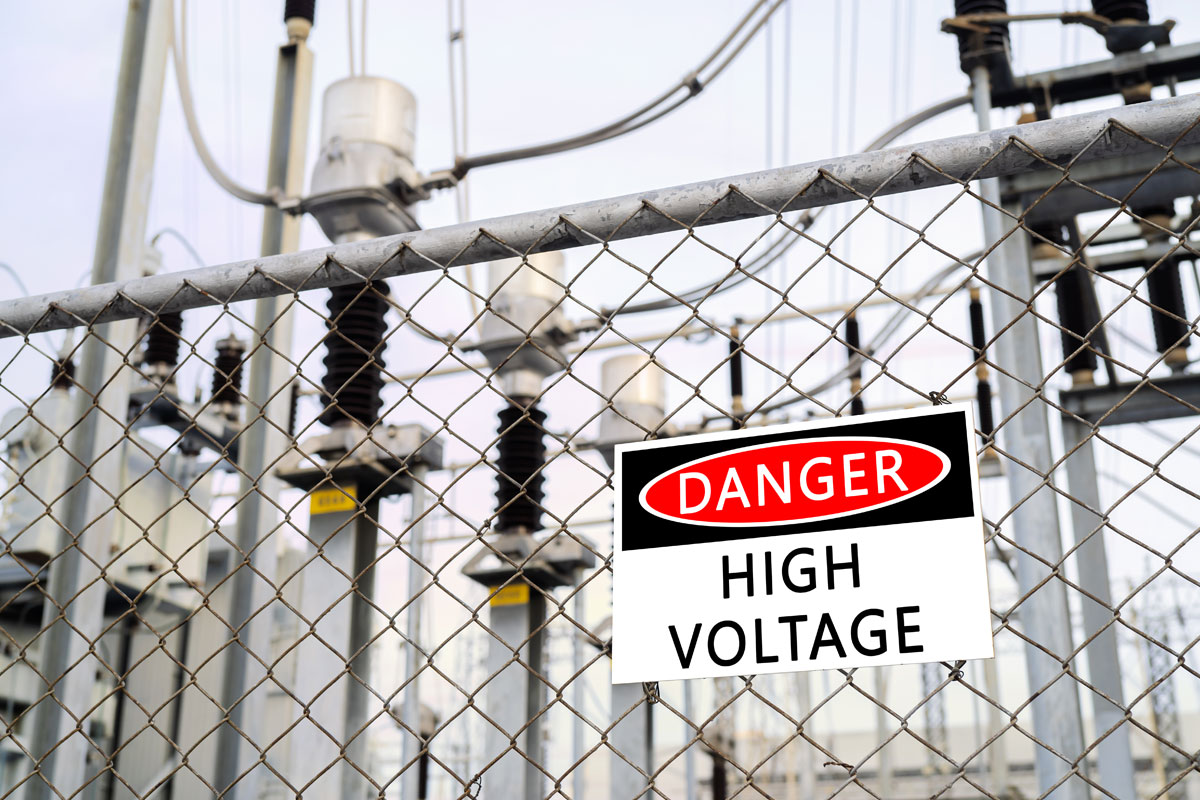
The signs around our equipment can save your life. Watch to learn how to be safe around our equipment.
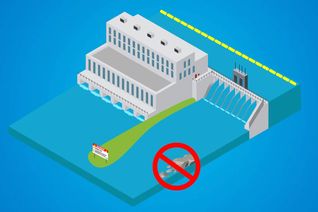
How signage can save your life
It’s important to obey signs around our equipment. Watch to learn how to be safe around equipment.
Video: 1:58
International power lines
International power lines are under the jurisdiction of the Canadian Energy Regulator (cer-rec.gc.ca).