
Tree and power line safety
Trees near power lines can cause serious safety risks and power outages. Use this page to understand what’s dangerous, who’s responsible and what to do next.
Who is responsible for tree trimming
Private and public property owners are responsible for keeping trees, shrubs and vegetation on their property safely away from overhead lines and hydro poles. Property owners should contact a qualified utility arborist to do the work.
Private property
Property owners are responsible for keeping trees and vegetation on their land clear of overhead lines and hydro poles. For safety, only a qualified utility arborist should trim or remove trees within 3 m (10’) of a power line.
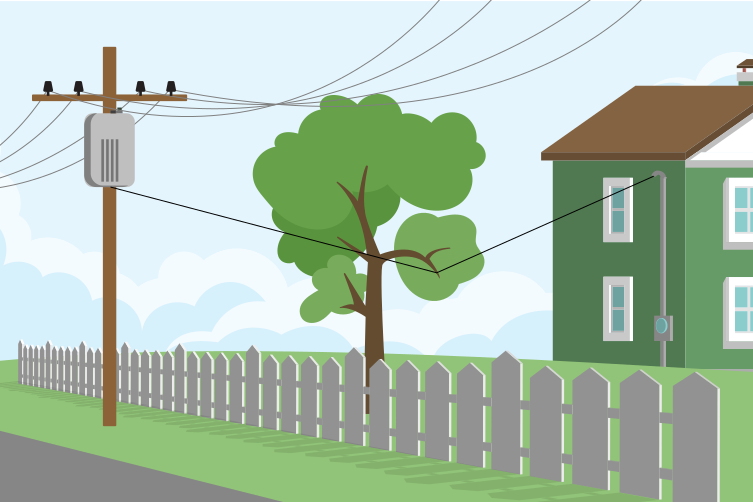
A tree on private property has grown into overhead lines running from a hydro pole to a house. Trimming the tree is the responsibility of the property owner. They should contact a qualified utility arborist to do the work.
Public property
Trees and vegetation on public property (such as boulevards or parks) are the responsibility of the city, town or municipality. Contact your local civic authority if you see a tree or branch on public land growing too close to overhead lines.
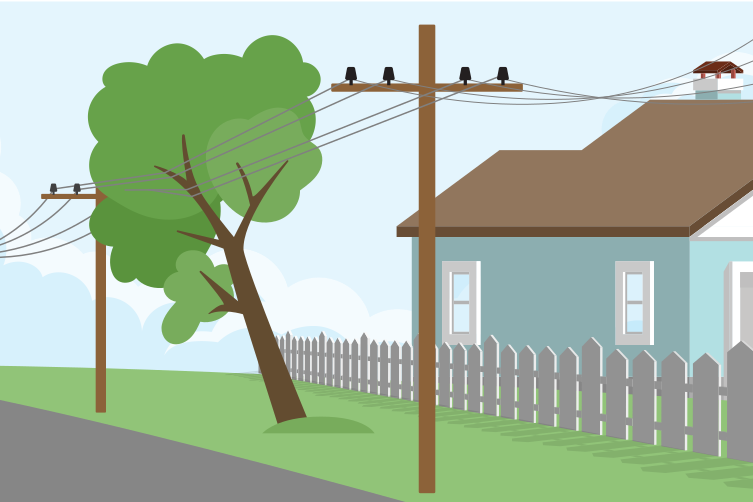
A tree on public property leans close to overhead lines. Trimming or removing the tree is the responsibility of the city, town or municipality and should be done by a qualified utility arborist.
Our responsibility
We trim or remove trees when they affect electrical safety or the reliability of your power. In emergencies or outage situations, our crews will cut or remove any tree, whether privately or publicly owned, to keep people safe and restore electricity. In these instances, branches and debris will not be cleaned up, as the priority is restoring power safely.
We run year‑round vegetation management programs to prevent outages before they happen. As part of this planned work, we clear trees and branches that are too close to our power lines, even if the trees are privately owned or located on public property. This proactive maintenance helps keep our system safe and reliable for everyone.
Learn more about vegetation management
Manage trees on your property
You should regularly assess trees and vegetation on your property to make sure they’re:
- not growing over or towards overhead power lines
- not tall enough or leaning in a way they could fall on the power line
- at least 3 m (10’) away from power lines
Tree safety assessments
Maintaining individual trees
Tree safety assessments focus on specific trees that are growing close to overhead lines or electrical equipment. These requests help us address these situations:
- branches touching or nearly touching overhead lines
- leaning or damaged trees that may fall onto wires
- trees that could soon create a safety hazard or outage
Depending on where a tree is, managing the tree may be your responsibility or that of the local municipality. In some cases, we may trim a tree if it poses an immediate safety risk or could interrupt electrical service.