
Vegetation management and safety
Why vegetation management is important
Overgrown trees and branches are one of the most common causes of power outages. When vegetation gets too close to power lines, it can cause outages, damage equipment and in some cases, create fire risks. That’s why keeping trees, branches and brush a safe distance from electrical equipment is essential for reliable power and community safety.
Vegetation management helps our crews respond faster during outages by allowing safe access to poles and lines. A clear right-of-way protects both our workers and the public while helping restore power more quickly.
We understand how important trees are to our customers and communities. Our crews follow established vegetation management guidelines and work carefully to maintain safe clearances while respecting the health of your trees whenever possible.
Responsibility
Private and public property owners are responsible for keeping trees, shrubs and other vegetation on their property safely clear of overhead power lines and hydro poles. Property owners should contact a qualified utility arborist to carry out this work.
Learn who’s responsible and who to contact for tree trimming.
We trim or remove trees when they pose a risk to electrical safety or the reliability of your power. During emergencies or outages and as part of our planned vegetation management program, crews may cut or remove any tree, whether privately or publicly owned, to protect public safety and restore electricity.
Vegetation management work: map
See the planned work for this fiscal year, along with areas where our crews have already done the work.
If the problem continues, you may need to disable your ad blockers to view the map.
Our approach
Our integrated vegetation management program is designed to keep your power safe and reliable:
Mechanical brush clearing
Mechanical brush clearing is an important part of our vegetation management program. We remove trees, shrubs and brush along a power line right-of-way (ROW) to keep vegetation safely away from electrical equipment. Our crews use a variety of specialized machines designed for different types of terrain and vegetation.
We use mechanical brush clearing mostly in rural areas, but sometimes in urban areas where it can be done safely. We keep these areas clear to reduce the risk of power outages, make maintenance easier and make sure that emergency vehicles can access the ROW when needed.
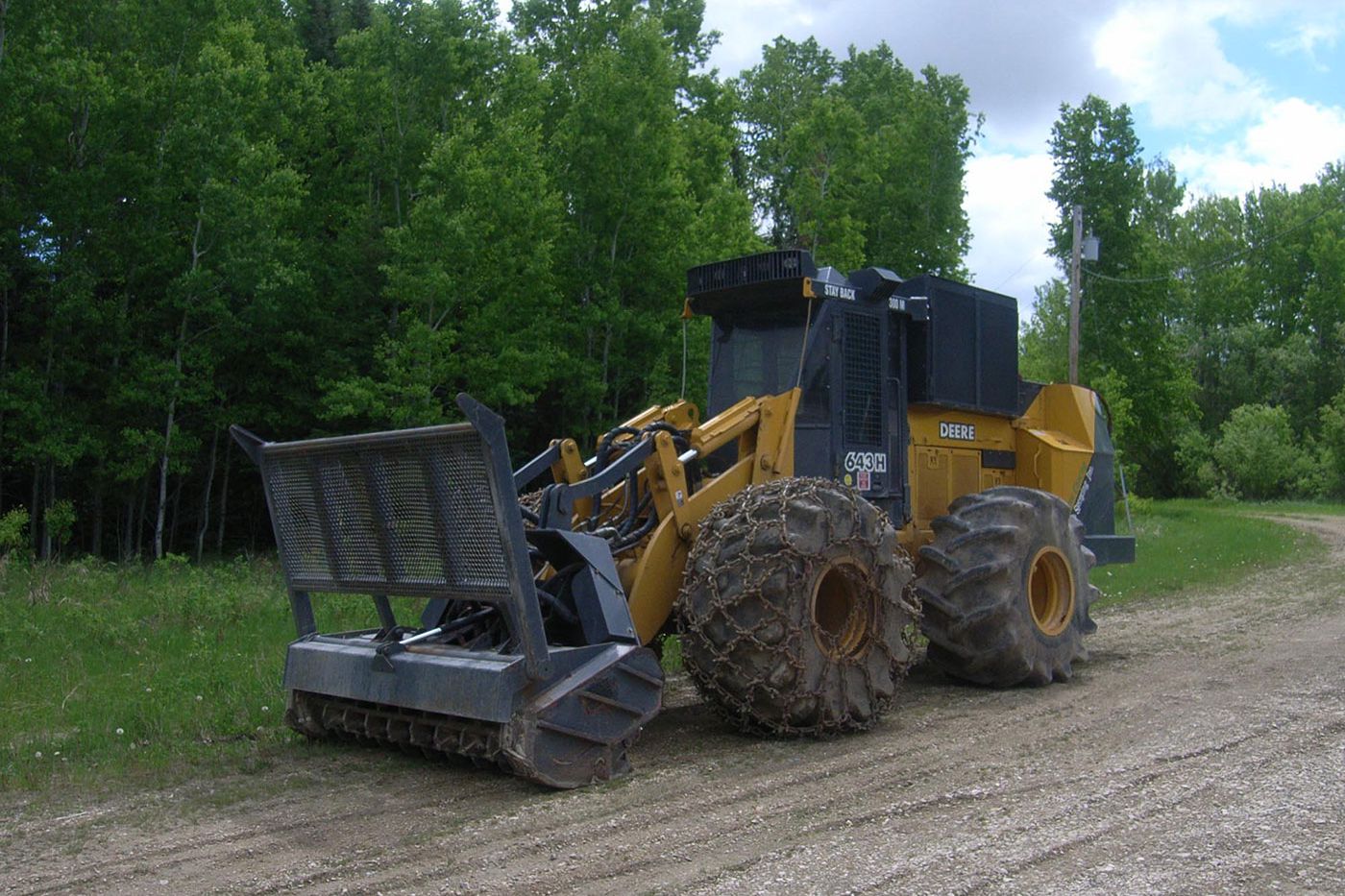
An example of a wheeled vehicle used for mechanical brush clearing.
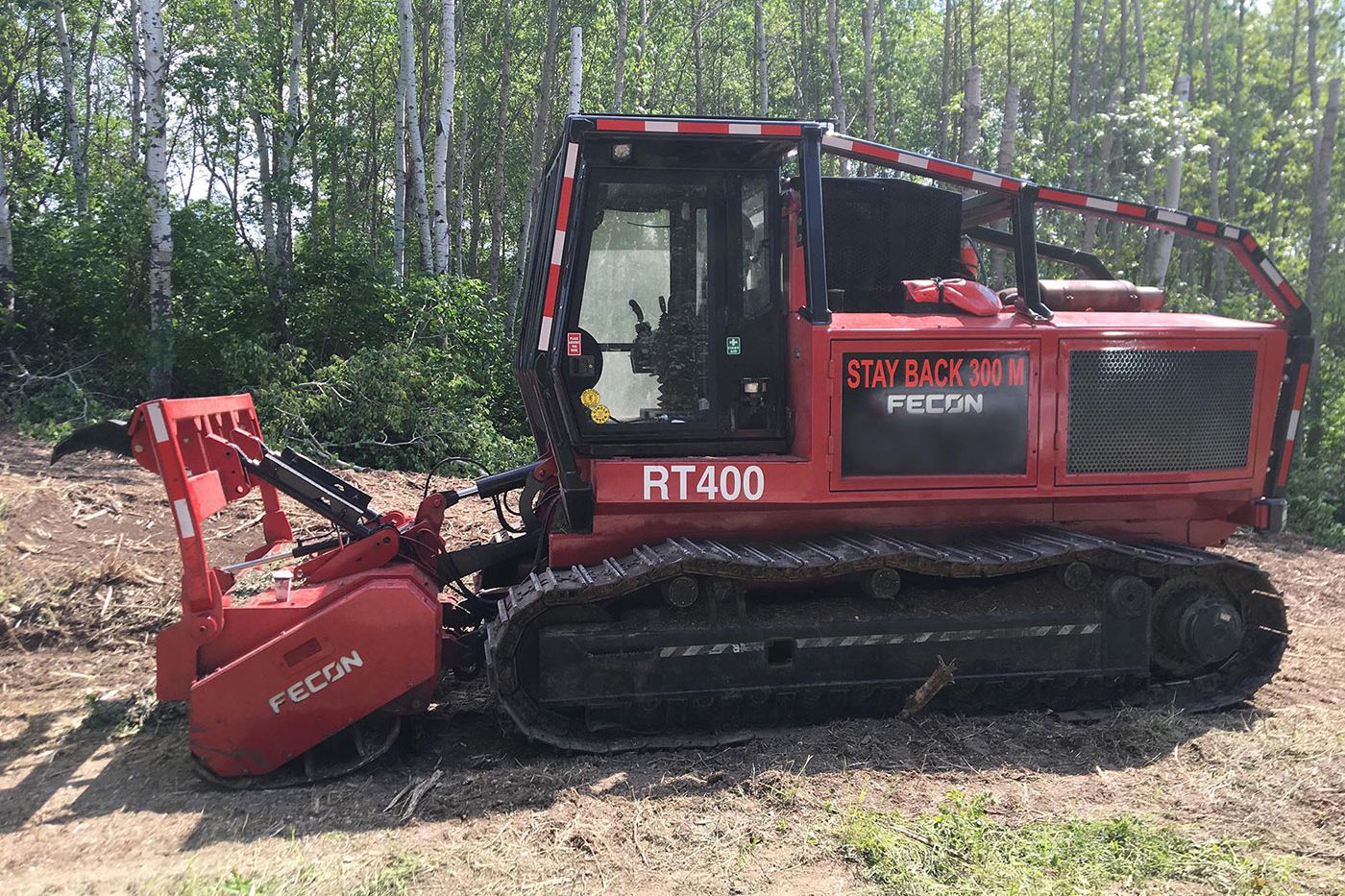
An example of a tracked vehicle used for mechanical brush clearing.
If trees are growing too close to power lines, we’ll arrange for utility arborists to trim the trees to a safe distance before mechanical clearing begins. This step, often called “topping” helps protect the lines and makes sure the work can be done safely.
Mechanical clearing equipment is big and loud and can be dangerous due to flying debris. If you see this work, keep a safe distance and never go near a machine that is working. Our crews will post construction signs along roadways or in public areas.
After mechanical brush clearing, our crews remove any remaining debris or mulch it on site. Mulched material is left in place, where it naturally breaks down over time.
Selective herbicides
Herbicides: chemical vegetation management
After mechanical brush clearing, we apply specific herbicides to prevent certain tree species from growing back into power lines.
Herbicides are applied at least one year after clearing, once new growth has started, and only in areas where trees are beginning to regrow. This is often more efficient and effective than mechanical brush clearing alone. These herbicides won’t kill grasses, shrubs and other vegetation.
Selective herbicides:
- keep vegetation a safe distance from electrical equipment
- reduce the need for repeated mechanical clearing
- prevent fast-growing trees from returning from stumps or roots
- maintain easier access for crews and emergency responders
We only apply herbicides to specific trees that pose a risk to electrical infrastructure.
All of the herbicides that we use are:
- registered products in Canada under the Pest Control Products Act
- authorized under our Pesticide Use Permit (PUP)
- applied by trained, licensed professionals that follow safety standards
Tree trimming and removal
While our first choice is to trim trees rather than remove them, sometimes a full removal is the safest and most reliable option. Factors that help us determine if a tree will be removed:
Location
- If a tree is growing directly under or very close to electrical infrastructure, trimming may not be enough to keep it at a safe distance.
Species and growth habits
- Some trees grow quickly, spread aggressively, or are prone to falling later in life. Species like elms, maples and willows are fast-suckering species and can quickly grow back into power lines. When these species are located under or too close to overhead lines, removal is often the safest choice.
Tree health after trimming
- There are strict clearance requirements around power lines. If trimming a tree back to meet safety standards would severely weaken or eventually kill it, we may remove the tree now to prevent future hazards.
If it is a planned tree trimming or removal, our crews will clean up all debris when the work is complete.
Emergency tree work
During emergencies, such as storms or immediate hazards, our crews focus on quickly removing problem branches to restore power and keep people safe. Crews that trim trees in an emergency will not clean up the branches when they’re done.
Learn more about tree trimming.