
Manitoba Hydro-Electric Board Visits First Nations Impacted by Grand Rapids Generating Station
Two-day visit focused on listening to community perspectives and understanding the lasting impacts of hydroelectric development
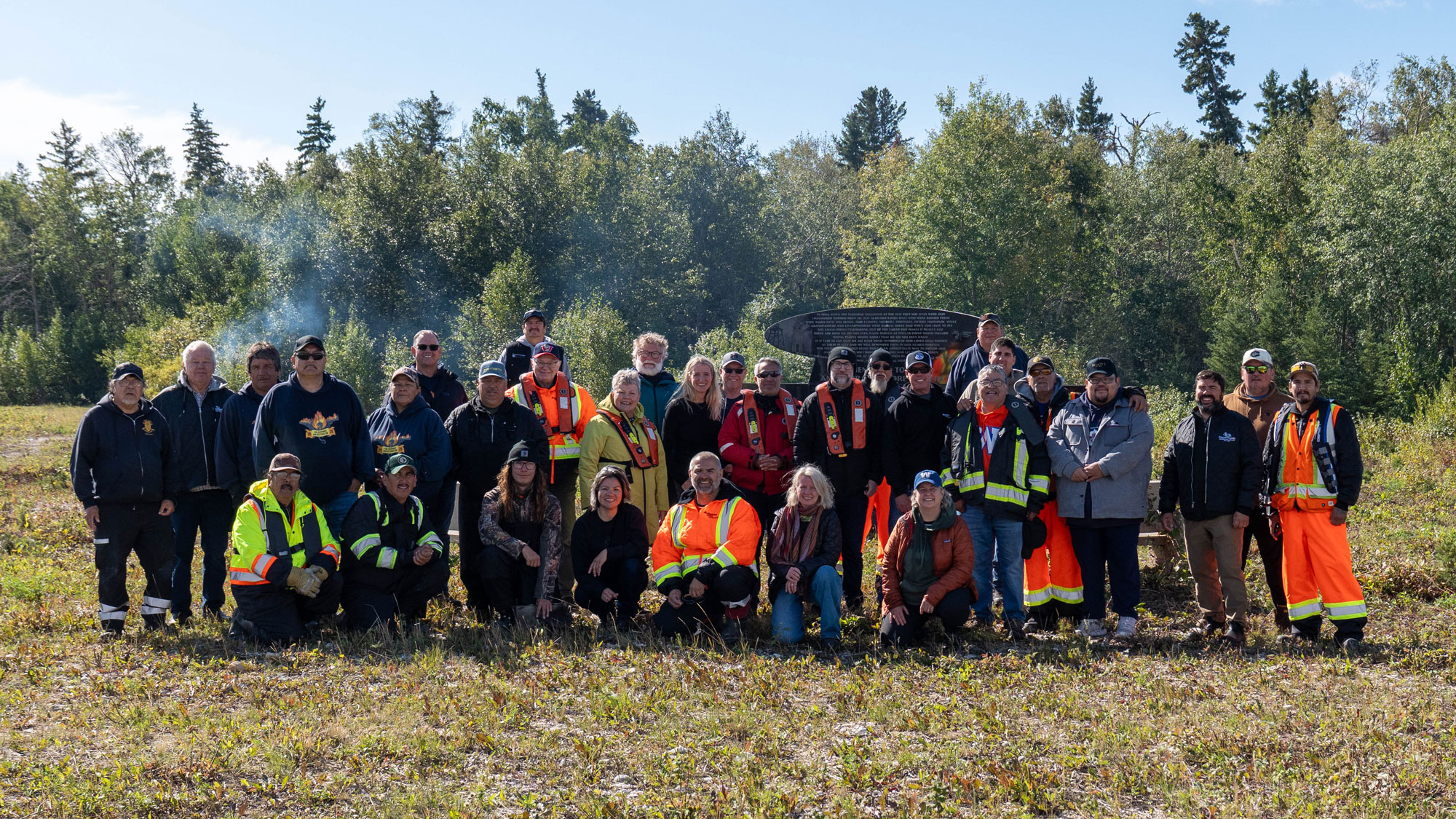
Manitoba Hydro board members and staff stand with Chemawawin Cree Nation (CCN) leadership and community members at the Old Post, the original site of CCN before Grand Rapids flooding displaced their community.
Members of the Manitoba Hydro-Electric Board and executive visited Misipawistik Cree Nation and Chemawawin Cree Nation last week to learn more about the impacts of the Grand Rapids Generating Station and strengthen relationships with communities affected by hydroelectric development.
The two-day visit included spending time at culturally significant sites with Misipawistik Cree Nation and Chemawawin Cree Nation, discussions with leadership and community members, and a tour of Grand Rapids Generating Station and Grand Rapids Fish Hatchery.
The visit builds on Manitoba Hydro’s ongoing engagement with Indigenous communities affected by hydroelectric development. In 2024, the Manitoba Hydro-Electric Board visited Gillam and met with First Nations that partner in the Keeyask Generating Station.
“It’s important the board connects with communities impacted by our developments,” said Jamie Wilson, Chair of the Manitoba Hydro-Electric Board. “In the case of Grand Rapids, building the generating station in the 1960s significantly damaged nearby First Nations communities. Reading reports and receiving briefings is important, but visiting in person, hearing directly from those affected, and gaining a deeper understanding of that history is invaluable.”
The Grand Rapids Generating Station was constructed between 1960 and 1968 on the Saskatchewan River. The project flooded more than 1,100 square kilometres of habitat, reserve lands and traditional areas used by local communities. The resulting environmental and social impacts disrupted traditional land use, livelihoods and cultural practices.
“As far as I remember, it’s the first time the Hydro board’s been here to visit us so we really appreciate it,” said Clarence Easter, Chief of Chemawawin Cree Nation. “It was especially meaningful to witness board members stopping to talk and listen to our community members – it means a lot to them.”
“I appreciate the board taking the time to come out and understand the local history and context behind Grand Rapids Generating Station,” said Heidi Cook, Chief of Misipawistik Cree Nation. “Hydro represents much more here than it does in the rest of Manitoba. Everything changed when Hydro came to town in the 1960s and it’s not something we’ll ever forget, but I’m optimistic that we can build a better relationship built on mutual respect and understanding. That relationship really starts with visits like these.”
Manitoba Hydro acknowledges the impacts of the Grand Rapids Project and has reached settlement agreements with regional communities, resource user groups and the Manitoba Métis Federation. The utility continues to work with local communities on mitigation measures, environmental monitoring and community-based programming in the project area.
For more information, please contact:
Peter Chura, Media Relations Officer
431-323-4511
pchura@hydro.mb.ca