
Gas pipeline exercise prepares us for worst case scenario
Our customer service centre in Russell had just been advised of a loss of pressure on the Minell natural gas pipeline near St. Lazare, Manitoba. Moments later a 911 call described the roar of escaping gas, a towering flame, and a crashed vehicle.
This was the start of an emergency response simulation conducted earlier this month with two local fire departments, alongside our field and emergency response staff. Within a short time of the 911 call, our field staff and first responders rushed to the site of the incident, while other staff members set up an emergency operations centre at the Russell customer service centre.
Behind the scenes, our emergency response coordination department ran the simulation exercise and threw various curve balls into the ‘pipeline breach’ scenario as it progressed.
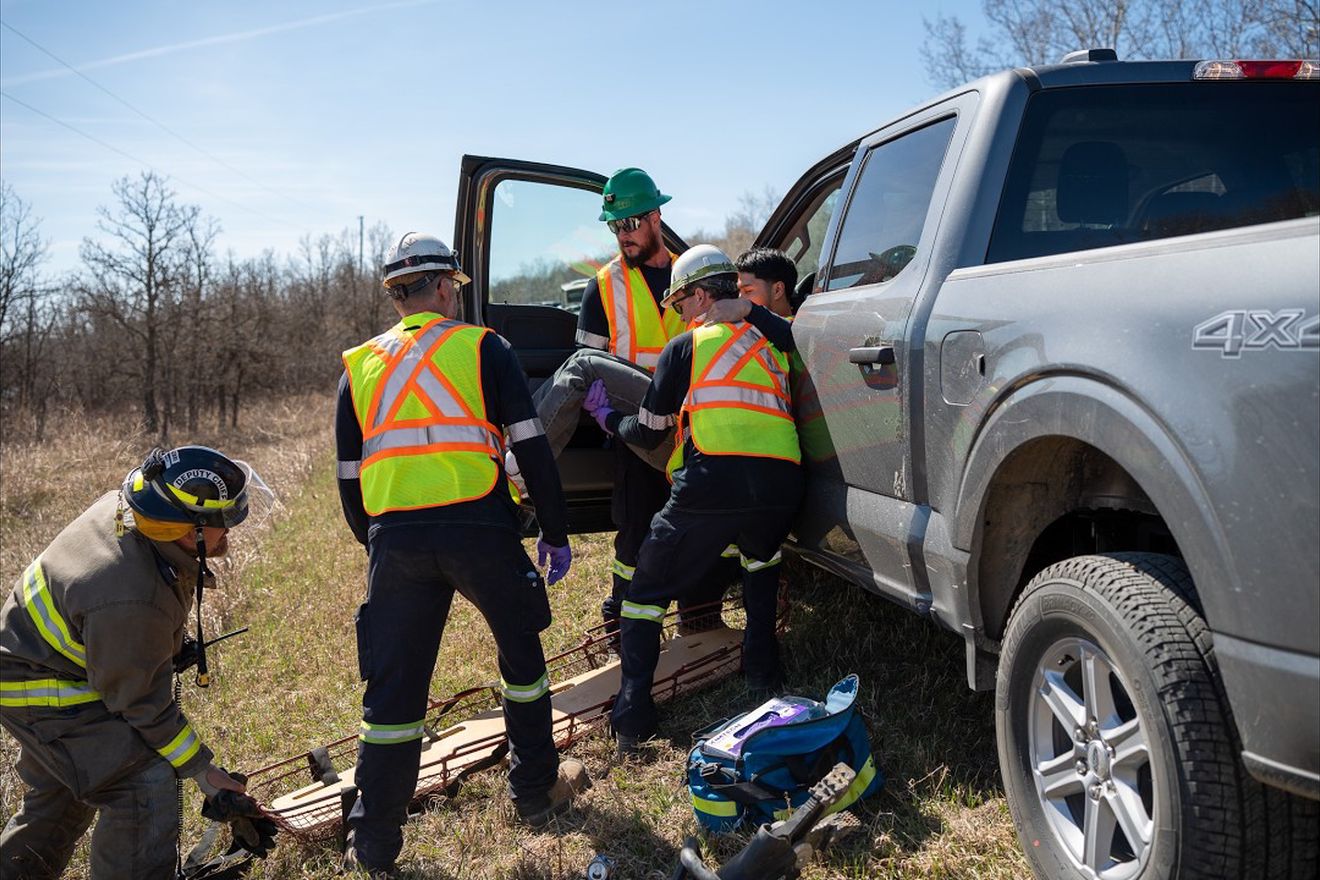
St. Lazare gas pipeline exercise prepares us for worst case scenario
Video: 2:13
“It’s important to practice what we do with the people we work with,” said Brad Hay (Enterprise Emergency Response Coordinator). “This gives an opportunity for our field crews to work with the people that they would be working with in an emergency, test out communications, and test out how they feed information to our emergency operations centre. Practice makes better.”
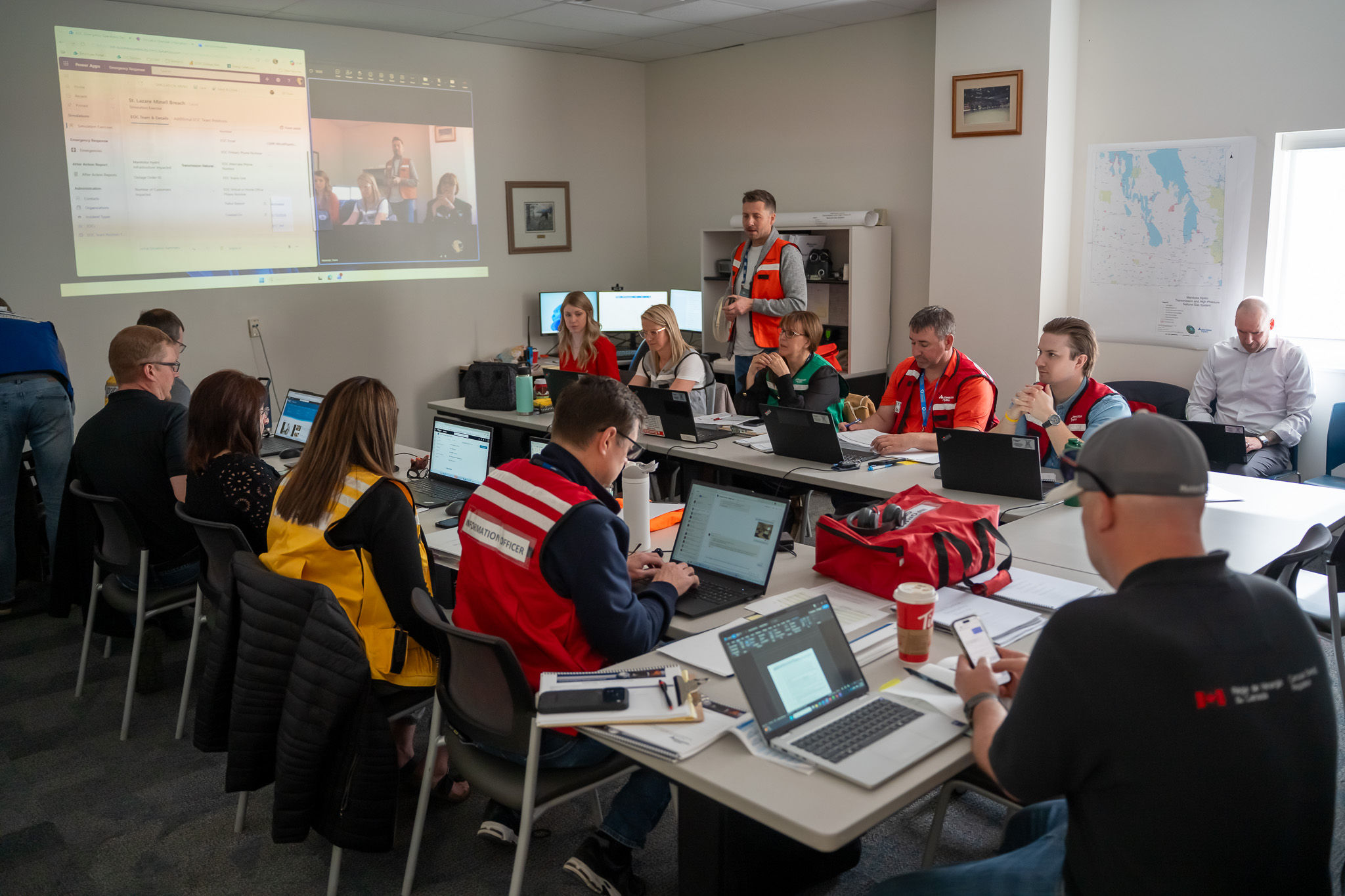
Manitoba Hydro staff simulate an emergency operations centre at Russell customer service centre.
Enlarge image: A group of people with laptops sit in a circle facing a projector screen.
The Minell Pipeline is a 70-km natural gas pipeline that originates near Moosomin, Saskatchewan, and travels to Russell, Manitoba, passing near the towns of McAuley, St. Lazare and Binscarth. It delivers the natural gas that heats homes, businesses, and critical infrastructure in much of the Parkland region, including the City of Dauphin.
Every three years, Manitoba Hydro runs a large-scale emergency simulation on the pipeline – though it runs many smaller exercises annually. Practice is crucial, because real emergencies do happen. Simulated events like this are often based on real-world situations. In this case, it was loosely based on a real situation that occurred in 2019, where a stolen vehicle collided with above-ground gas infrastructure servicing Tyndall, Manitoba, causing a major leak and temporary loss of service to the community.
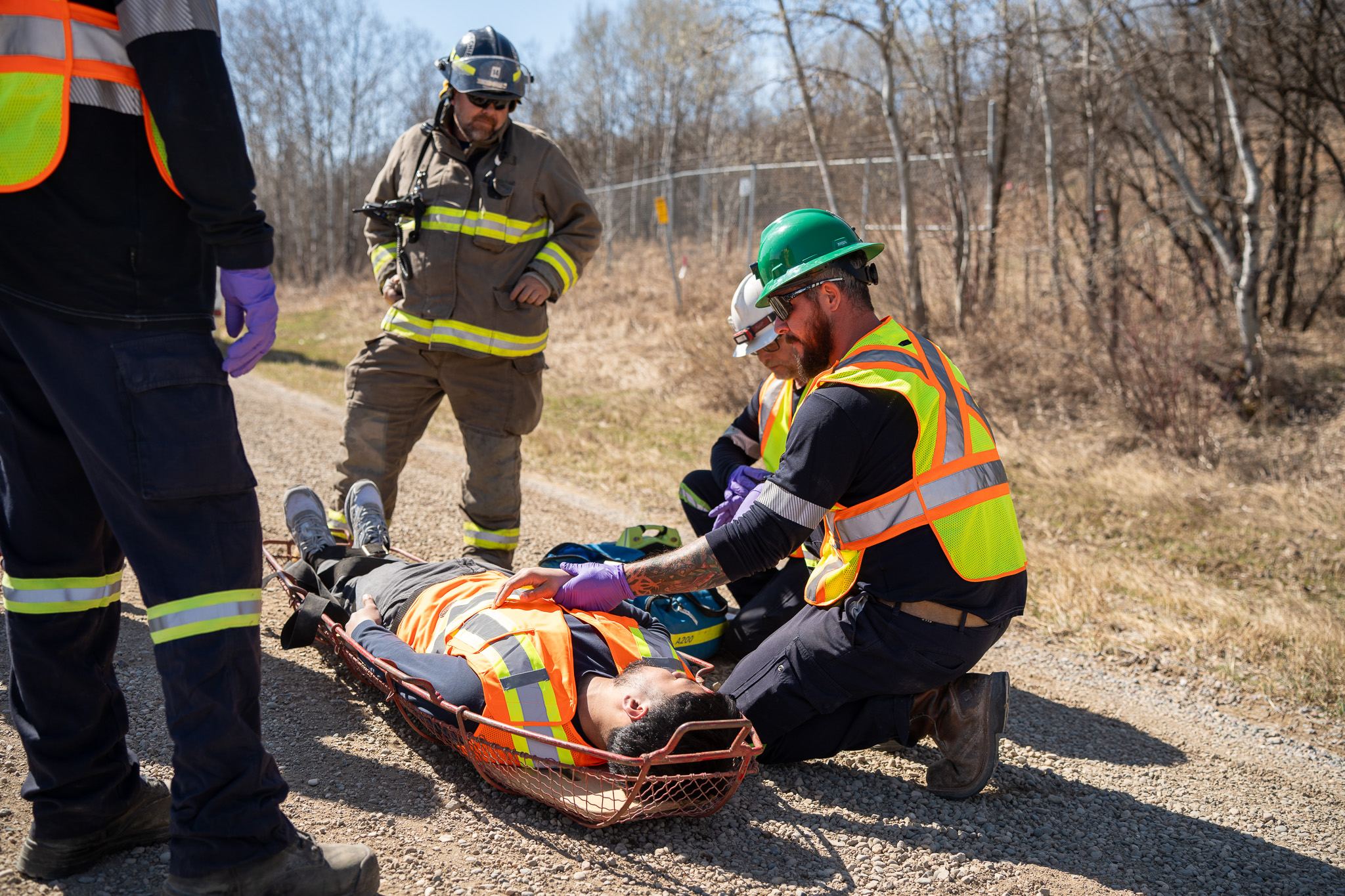
As part of a scenario where the driver of crashed vehicle has passed out, a representative from Nutrien checks the driver’s vitals.
On the Minell Pipeline, in 2021, farm machinery punctured the underground pipeline, also causing a major leak. In both cases, there were no injuries, but both situations were very serious and presented unique challenges to first responders and Manitoba Hydro field staff. “Exercises like this teach us about communication,” said Brad. “We live in a society where you’re used to having everything at your fingertips, but emergencies aren’t like that.”
Brad said practicing in logistically challenging situations gives staff more experience in dealing with the challenges of communication and logistics in remote locations and has a crossover benefit to different events, such as last year’s wildfire season.
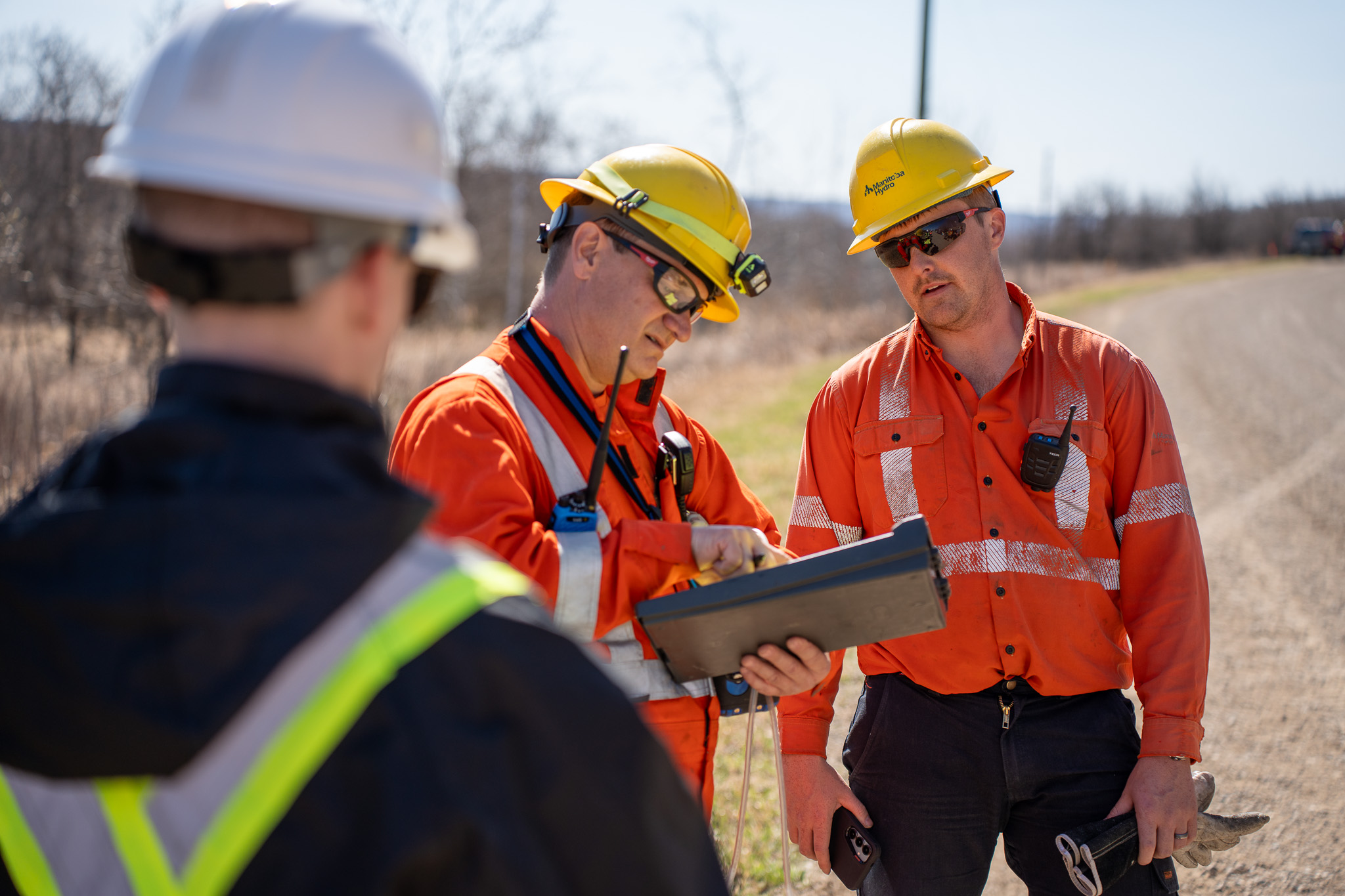
Glenn Gorda and Ryley Weir review a tailboard at the emergency simulation.
Enlarge image: Two people in safety gear look at a clipboard.
The exercise and the media attention it attracted was also helpful in reinforcing an important public safety message. “We can manage (an emergency like this) and we practice managing it, but if you could help us out with clicking before you dig and taking a look for those pipeline markers, it would also really help,” Brad said. “Doing your part to lessen the likelihood one of these events is going to occur is a big deal.”
Find out how and why to use Click Before You Dig.
In addition to emergency response simulations like this, we conduct inspections and regular maintenance of our gas pipelines.