The journey to upgrade Little Grand Rapids
How do you get 32,000 lbs of critical electrical equipment to a remote fly-in community if it’s too heavy for a plane?
In the case of the transformer upgrade at Little Grand Rapids, the answer was a 15-hour journey along winter roads and across frozen lakes.
Whether it’s an urban centre or a community at the end of a winter road, our goal remains the same: deliver reliable energy to the people and communities that depend on it.
“Little Grand Rapids First Nation recently built a new school, which requires more power from the station,” said Jordan Mackinnon, the project’s engineer up until fall 2026. “That’s why it’s important we replace the old transformers with new ones so we can reliably supply more power and the community can continue to develop and expand.”
However, supplying more power to a remote community is unfortunately not as simple as putting the new equipment on a truck and sending it on its way.
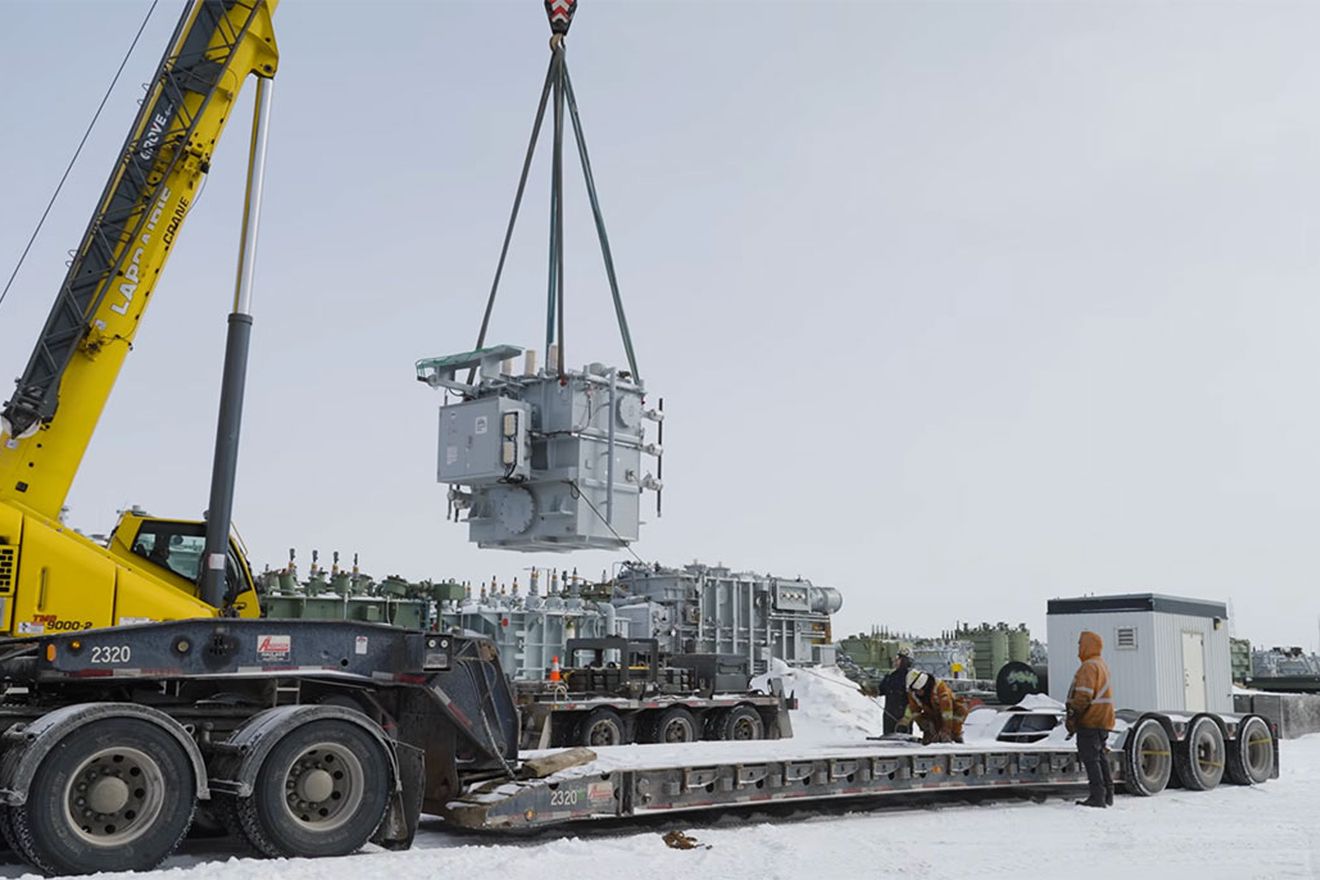
Little Grand Rapids - Transformer Upgrades
Video: 2:19
Step 1: lots of logistics
“There’s only about four weeks of the year when the ice is thick enough to withstand the 72,000 lbs of transformers, transportation truck and their associated equipment,” said Jordan.
There’s an incredible amount of planning that happens in advance of the winter road journey so that our team is ready move the transformers the moment the ice is thick enough.
The planning started months before the move date and involved many groups within Manitoba Hydro. It also meant working with Manitoba Transportation and Infrastructure to make sure the ice would be thick enough for the weight of the heavy equipment.
“There was a lot of time spent stressfully looking at weather forecasts to make sure we got the temperatures required to freeze the ice thick enough,” said Jordan. “While most Manitobans were asking for warmer temperatures in winter, we were hoping for cold.”
Step 2: the journey
If you like the drama of Ice Road Truckers, this story’s not for you.
No trucks went through the ice. No mechanical failures in the middle of nowhere. And no trailblazing through blizzard conditions. Our team delivered the transformers on time, without near-death experiences or fierce workplace rivalries.
Despite the route from Bloodvein to Little Grand Rapids being the exact route featured in multiple episodes of Ice Road Truckers, the reality is that our transformers were delivered in an organized, spaced-out convoy monitored by satellite communication and escort vehicles.
On the winter roads, the convoy traveled between 10 km/h to 30 km/h to make sure the expensive electrical equipment stayed intact.
In the multiple frozen lake crossings, the weight limits were all carefully accounted for by the project team, thanks to regular ice thickness testing.
It was a high-stakes operation, but the rigorous planning that leads up to a journey like this makes it almost run-of-the-mill when it actually happens.
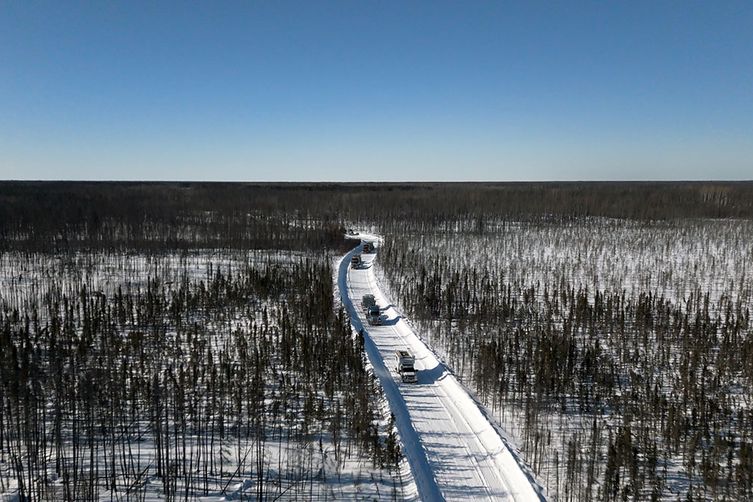
The convoy of trucks on the winter road from Bloodvein to Little Grand Rapids.
Step 3: connecting the transformers
With the transformers safely in Little Grand Rapids in winter, they were stored on site until summer, when the ground thaws enough to complete the foundation work.
As of August 20, 2026 the first new transformer went in-service, which already substantially increased the electricity capacity for Little Grand Rapids and Pauingassi First Nations.
But we’re not finished.
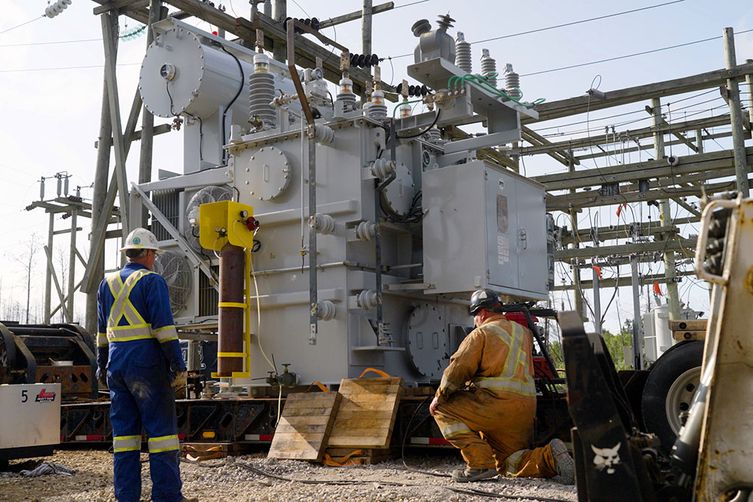
The heavy hauling crew moves the transformer into place in Little Grand Rapids station.
Step 4: more logistics
“All three transformers are now on site, but the foundation for the remaining two transformers need be built and before they can be properly connected,” said Lockhart Miller, the project manager leading the project since fall 2026.
This involves another ice road journey this winter with the remaining necessary materials, and then the two transformers are planned to be connected in the following year.
The work in Little Grand Rapids is one example of the ongoing work to repair, replace and upgrade our electrical system across Manitoba. As communities grow and electricity needs change, these upgrades help maintain reliable service while adding the capacity needed to meet growing energy needs.
Read more about what we’re doing to repair, replace and upgrade our electrical system across Manitoba.